
Warming Hearts and Saving Lives: An Inside Look at Cache Valley’s Warming Center
Hailey Westenskow
Contributing Writer
“No one has spoken to me face-to-face in more than six months. I felt like I was invisible.”
This was one of the first comments Heather Crockett heard when she opened her first season as executive director of The William A. Burnard Warming Center in Logan this winter. New to the homelessness response side of non-profit work, she had much to learn about the individuals experiencing homelessness in Cache Valley.
"Most of our guests are employed," she said. "I never would have thought that. That's just not the picture that you have of most homeless people, but over 50% of our guests have employment, and they've just had different issues."
After a decade at United Way of Northern Utah, she found herself immediately invested in the mission of the Warming Center. "What I love about this is that there are simple questions to ask to know if I've been effective or not," she said. "Is the center open? Are there enough volunteers? Is there food? And if so, it's been really purposeful and meaningful just to be able to know if I've been effective that day."
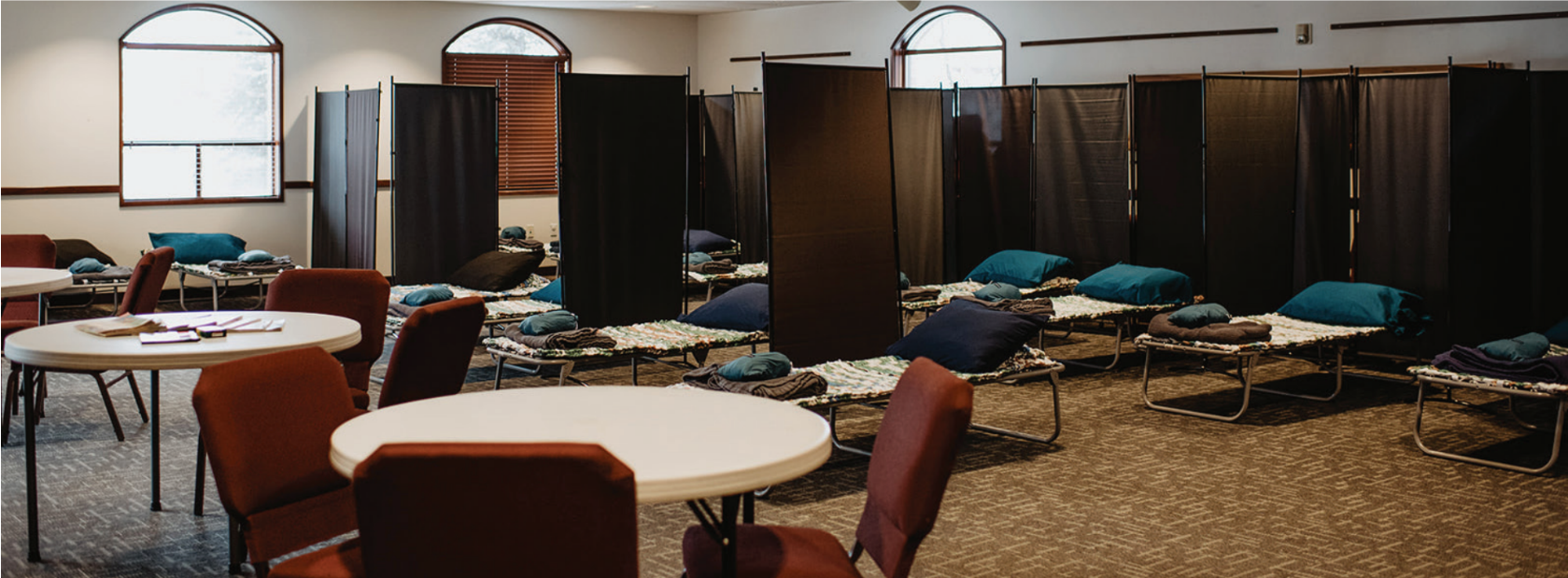
The William A. Burnard (WAB) Warming Center is currently hosted in a room at St. John's Episcopal Church and provides "safety, warmth, and care for unhoused individuals and families on the coldest nights of the year in Cache Valley." Each night, the warming center is constructed as volunteers set up cots and grocery bag mats donated by the Cache Valley Humanitarian Center, complete with sheets, blankets, and pillowcases. Guests are able to stay between 7 p.m. and 8 a.m. every night during the season, which runs from the end of November through mid-April. They can also enjoy reheated frozen nutritious meals provided by USU students, as well as resources such as hygiene products, donated coats, and clothing. Sixty-three volunteers are needed each week to keep up with the current demands, with several volunteers contributing to more than one shift per week.
Additionally, a case manager is on-site to provide support to help guests work through the next steps toward housing. For the majority of the guests, this Center is only temporary as they segway back into housing. "They're down on their luck, had a car accident, medical bills, or different things that have impacted their ability to stay housed," Heather said.
One example is Zach, a retired veteran who became homeless in December 2022 during the WAB Warming Center's first season and shared his experience on the Bonded Bros podcast. Battling severe PTSD and alcoholism, Zach had lost everything, including his truck, home, and wife. Sitting outside Smith's Marketplace one frigid day, he learned about the Warming Center from a passerby. On his first night, a volunteer looked him in the eyes and said, "We'll love you here. We'll help you with what we gotta do here, and we'll treat you like you want to be treated."
That simple act of dignity sparked everything. Staff immediately asked what he needed, helped connect him with counseling, and supported him as he rebuilt his life. Three years later, Zach is back home with his wife, nearly finished with his bachelor's degree in psychology, and working at Logan River Academy. "If it weren't for them, my parents would have been burying me three years ago," he said.
The Warming Center is now facing a critical challenge. Nearly every night, they're approaching fire code capacity, and Heather worries about having to turn people away. "I'm going to have to shut my doors and say, sorry, there's no more room at the inn, and that is the last thing I want to tell somebody," she said. The church has offered an upstairs classroom to expand capacity, but it requires two overnight paid staff, plus additional cots and blankets — a total of $20,000 is needed for the remainder of the season.
While the Center currently only operates from November through mid-April, Heather stresses that the need extends beyond winter. "The misconception that we are only needed during the cold months is just false. We are needed year-round," she said, pointing to guests who need safe storage for medications like insulin or who've told staff the Warming Center prevented them from committing suicide. "That risk doesn't go away just because the temperature changes," Heather said.
Families can help in several ways. The Center partners with USU basketball teams for quarter donation drives (guests are allowed two loads of laundry per week). Food drives for shelf-stable items are always needed when feeding up to 40 people nightly. Volunteer shifts run mornings (6 to 8:30 a.m.) and evenings (6 to 11 p.m.), and tours are available for families who want to show their children what the Warming Center looks like.
Financial donations can be sent to The William A. Burnard Warming Center, P.O. Box 344, Logan, UT 84323, and those wishing to donate to the Center's Amazon wishlist can visit wabwarmingcenter.org/donate-2.
Heather’s message to Cache Valley families is simple: "[Those who need this service] are people too, and sometimes they just need a little bit of help in order to get back on their feet again."
